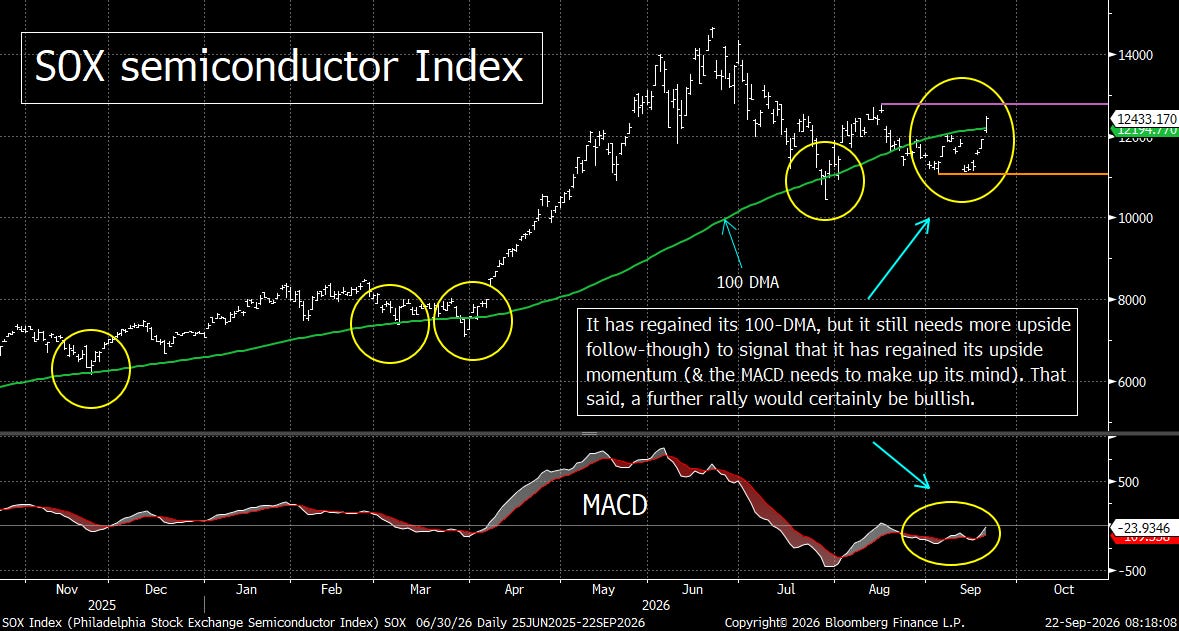
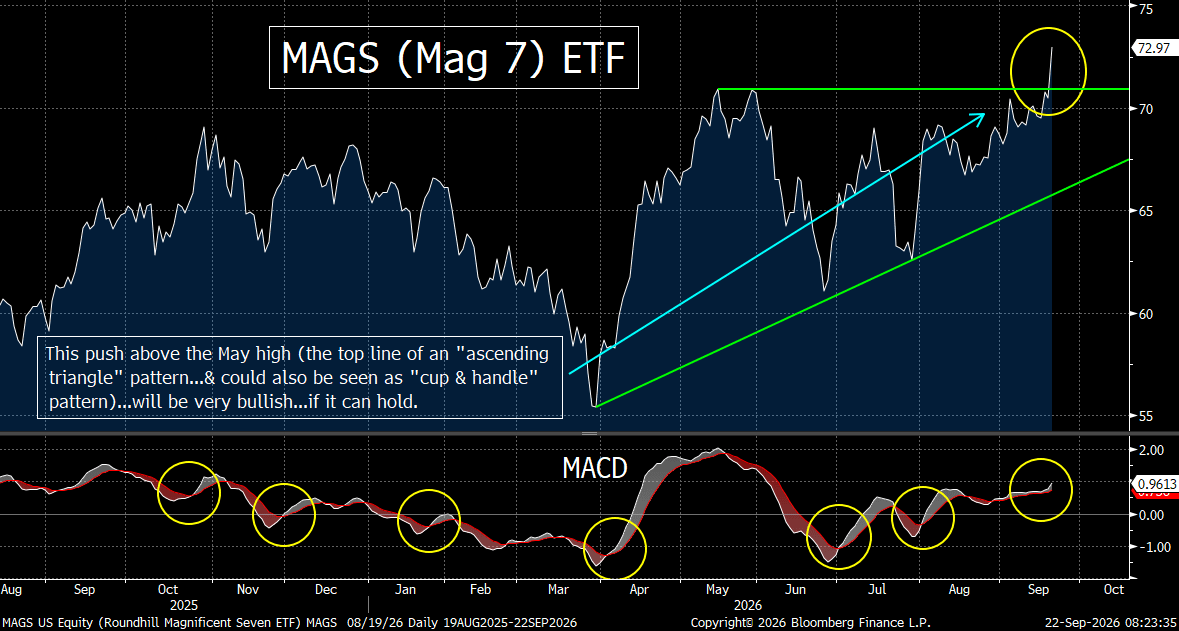
A combination of lower oil prices, excess liquidity, and (especially) a strong rally in the tech sector…helped the S&P 500 and the NDX Nasdaq 100 close very near their record highs…….Even though there are many factors impacting the stock market right now, whether the tech sector can continue to advance or not…should continue to be the most important factor in determining the direction for equities over the next few weeks…the next few months…and beyond.
The stock market saw a very strong rally yesterday….as oil prices fell…and a strong rally in Meta (META) helped the tech sector advance in a meaningful way. The rally came on average volume….and breadth that was quite poor. In fact, it was only 3 to 2 positive on the S&P 500 index…which is in not good at all for a day when the index rallied 1.5%. We’d also note that the number of S&P 500 stocks which hit a 52-week high was only 7…which is extremely low given that the index closed just 0.44% below its all-time high…….…In other words, it was a remarkably narrow rally yesterday.
Having said this, the rally in the tech sector was a very strong one. It was enough to push the MAGS (Mag 7 ETF) above the key resistance level we highlighted in our weekend piece…and (more importantly) to a new record. It also helped the SOX semiconductor index push bac above its 100-DMA…which has been a very important level for the chip stocks this year……That move was not a meaningful breakout for the SOX, so it’s going to have to see more upside follow-through to send out a bullish signal for this group, but the recent 11% rally has definitely been a good one.
The main reason for the advance in the tech sector was the continued success of Meta’s (META) new Muse AI agent….which has received rave reviews…and has quickly climbed to the number one most downloaded app in the US. This helped META rally 11% yesterday…which means the stock has advanced a whopping 36% over the past month or so. This, in turn, has raised the energy surrounding the idea that demand for the chips need to power these agents will remain high. Therefore, it helped the hyperscalers AND the chips stocks rally in tandem yesterday in a material way.
Of course, the drop in the price of oil…which took Brent crude down to $100 (and below that level this morning) helped the market as well. However, this move in crude has only produced a mild drop in long-term Treasury yields (with the 10yr yield still above 4.9%). So, it seems like that move in the tech sector was the key catalyst in yesterday’s stock market gain………We’d also note that the outsized rally in Bitcoin in all probability signaled that some excess liquidity was being provided as well. So, this excess liquidity (in front of the Trump/Xi summit) likely helped yesterday’s advance as well.
As for the major averages, as we highlighted above, the S&P 500 closed just 0.44% below its all-time high from August…and the NDX Nasdaq 100 closed jut 0.58% below its June record high…(and the Nasdaq Composite DID close at new record)……The Russell 2000 remains more than 6% below its August record…and the S&P 500 Equal Weight Index finished the day 4.4% below its own record high. (So, this is another example of how narrow this most recent rally has been.) However, since most of the rally over the past three years has been very narrow, it might not be a major hindrance for the equity market at this time either.
Put another way, if the entire tech sector as a whole can advance to the degree it has over the past 3-4 trading days, it should help the entire market make new highs between now and the midterm election.
This is why we positioned those tech charts so early in our most recent weekend piece. (We have updated the charts on the SOX and MAGS below.) As much as everyone keeps trying to keep talking about other areas of the stock market, the tech sector is what will continue to drive it…one way or the other…for the foreseeable future. Therefore, whether the MAGS can hold onto these recent gains…and (especially) whether the chip stocks can regain some significant upside momentum…should be the key as to how the stock market acts over the rest of this year (and beyond).